Appetite
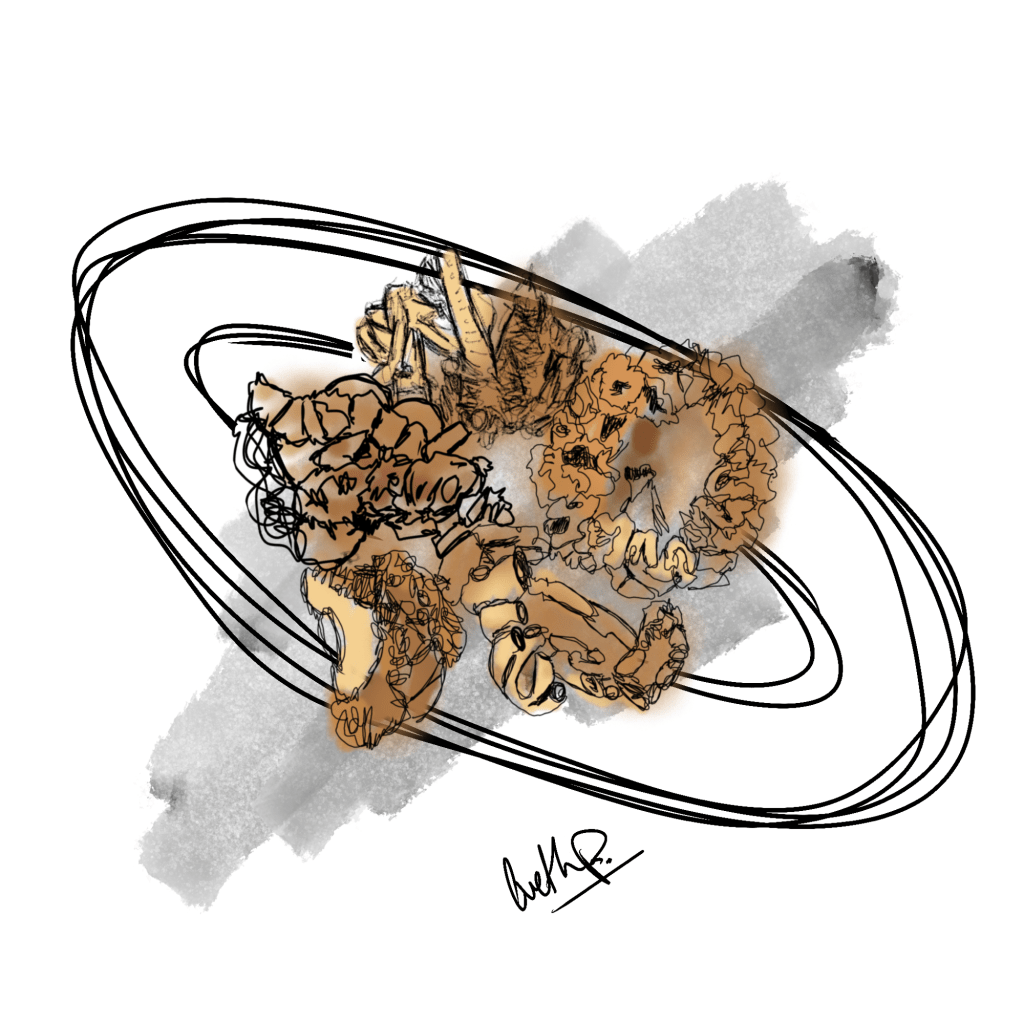

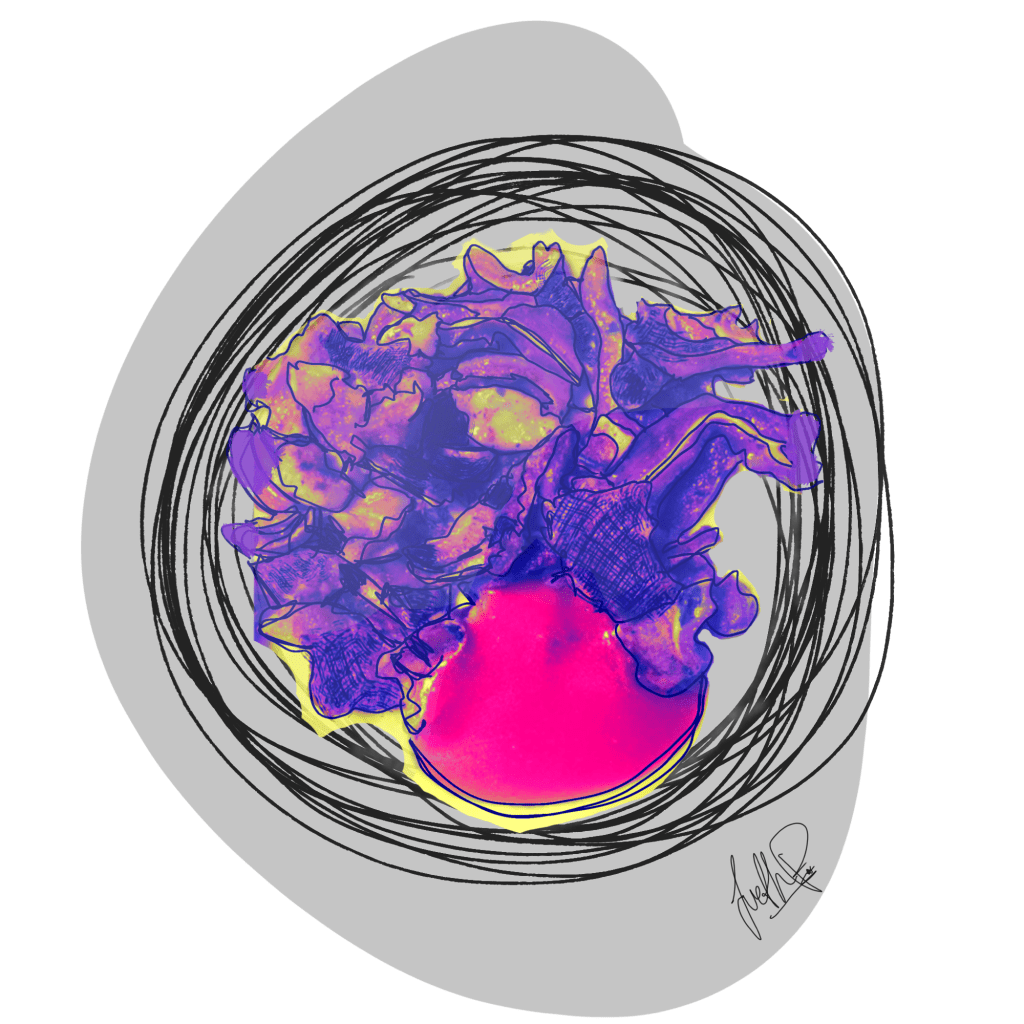
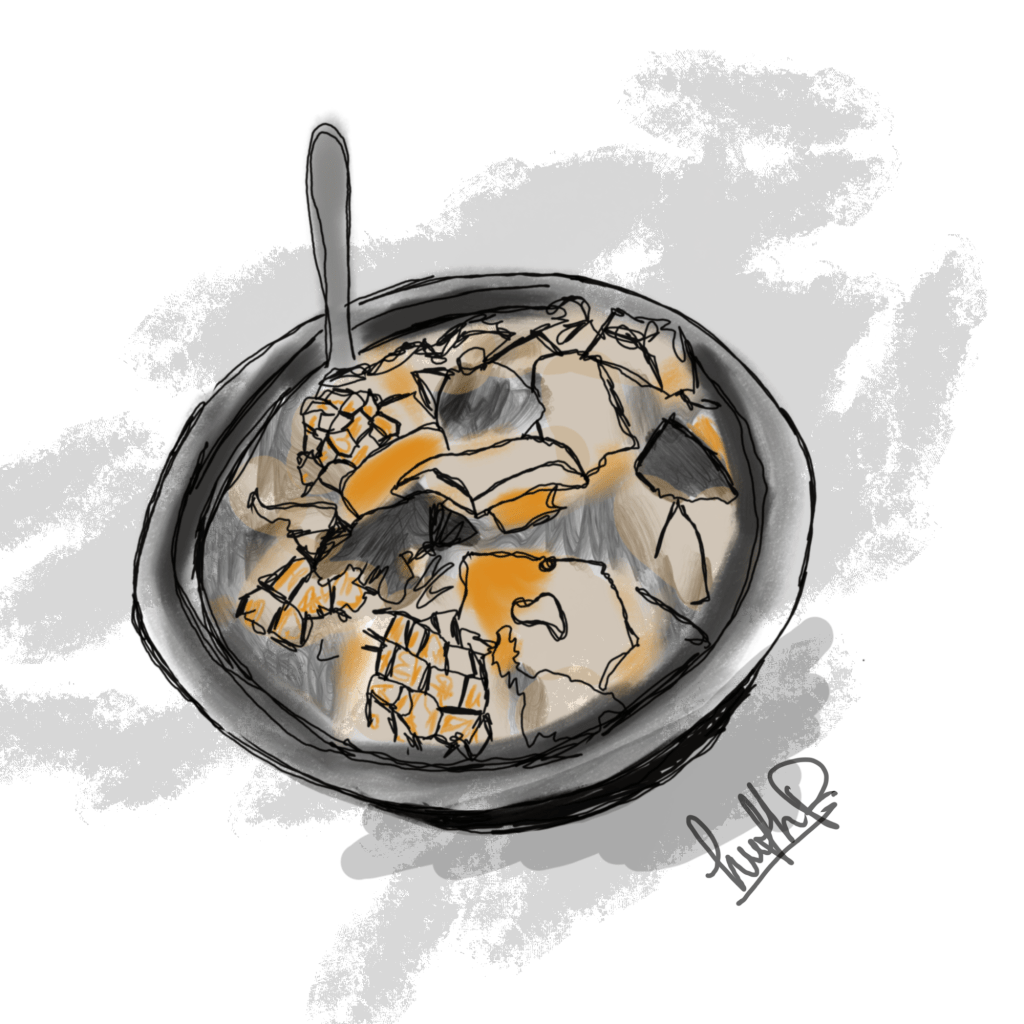
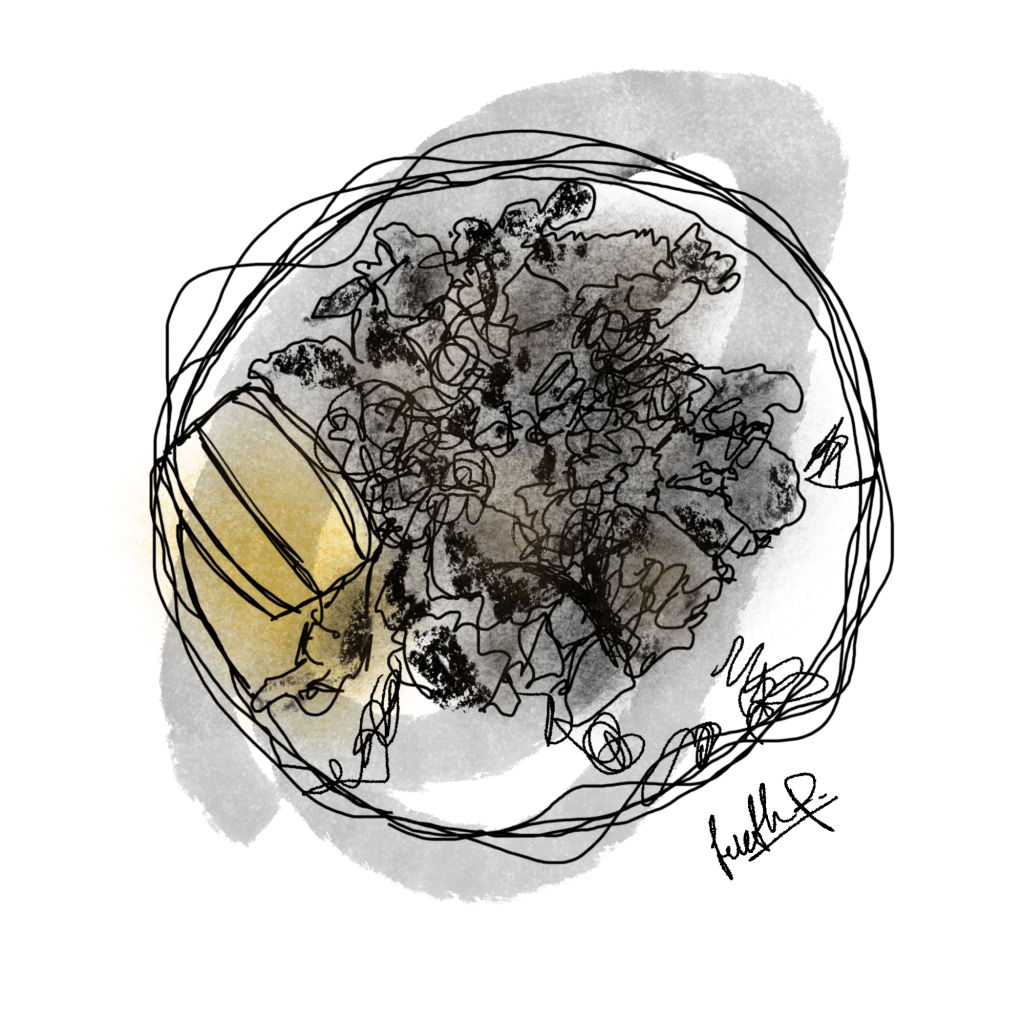
Serie Curioseando por Madrid. 2025. Collab with GUTS! Magazine.
Entresijos y gallinejas. 2025. Ilustración digital.
Zarajos. 2025. Ilustración digital.
Orejas. 2025. Collage digital.
Callos. 2025. Ilustración digital.
Mollejas. 2025. Ilustración digital.
Series Curious About Madrid. 2025. Collaboration with GUTS! Magazine.
Entresijos and Gallinejas. 2025. Digital illustration.
Zarajos. 2025. Digital illustration.
Orejas. 2025. Digital Collage.
Callos. 2025. Digital illustration.
Mollejas. 2025. Digital illustration.
Caos Mundo. 2025. Videoarte.
Este video recopila escenas grabadas en Italia, Francia, Sudáfrica y Colombia que retratan experiencias culinarias diversas —desde comidas callejeras hasta preparaciones colectivas— y evidencian cómo la cocina está profundamente arraigada a los contextos culturales y sociales. Voces en off de profesionales de la gastronomía y una banda sonora compuesta por cantos tradicionales y música colombiana acompañan este recorrido sensorial, donde uno de los momentos más íntimos surge con una canción de salsa que, tras meses lejos de mi tierra, me conecta emocionalmente con mis raíces. La obra dialoga con el Tratado del Todo-Mundo de Édouard Glissant, especialmente con su concepto de “criollización”, que plantea un mestizaje cultural no como amenaza, sino como una fuente impredecible y fértil de creación. Desde esta mirada, cocinar y compartir una comida se convierte en un acto que promueve la interconexión, el recuerdo y la celebración de la diversidad.
Chaos World. 2025. Video art.
This video compiles scenes filmed in Italy, France, South Africa, and Colombia that portray diverse culinary experiences—from street food to collective preparations—and highlight how cooking is deeply rooted in cultural and social contexts. Voiceovers by gastronomy professionals and a soundtrack composed of traditional songs and Colombian music accompany this sensory journey, where one of the most intimate moments arises with a salsa song that, after months away from my homeland, emotionally reconnects me with my roots. The work dialogues with Édouard Glissant’s Treatise on the Whole-World, especially his concept of “creolization,” which presents cultural mixing not as a threat but as an unpredictable and fertile source of creation. From this perspective, cooking and sharing a meal become acts that promote interconnection, remembrance, and the celebration of diversity.

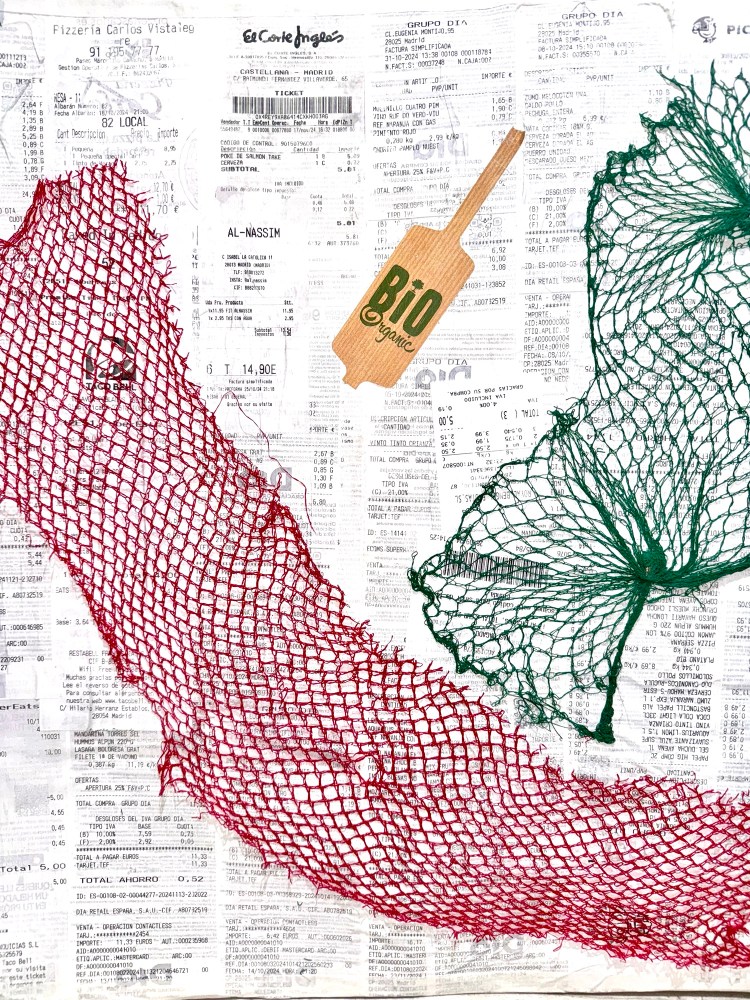
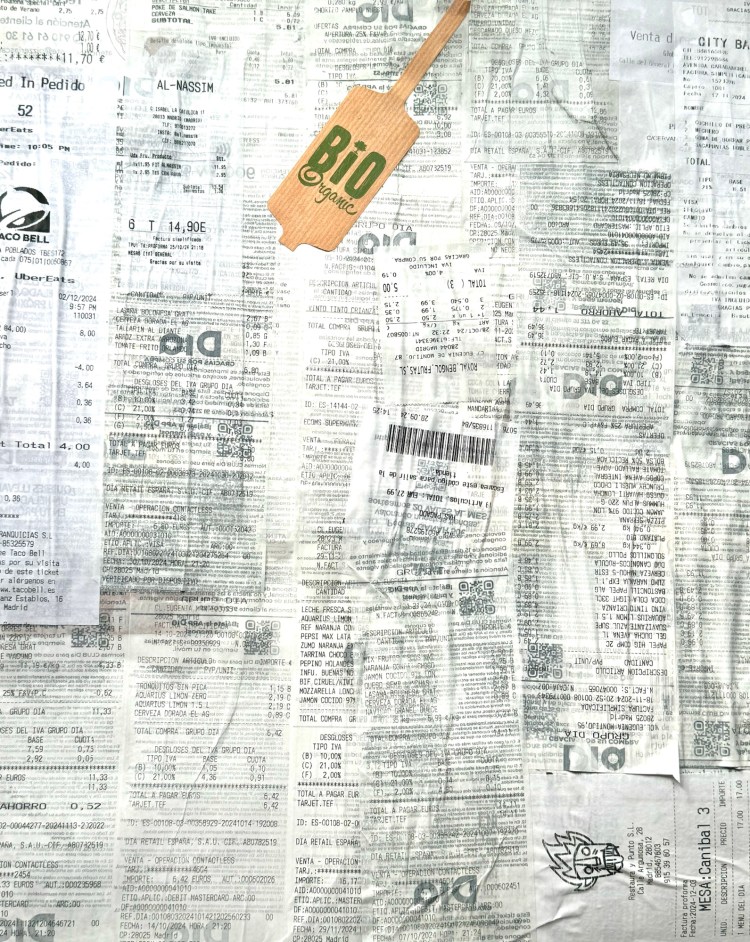
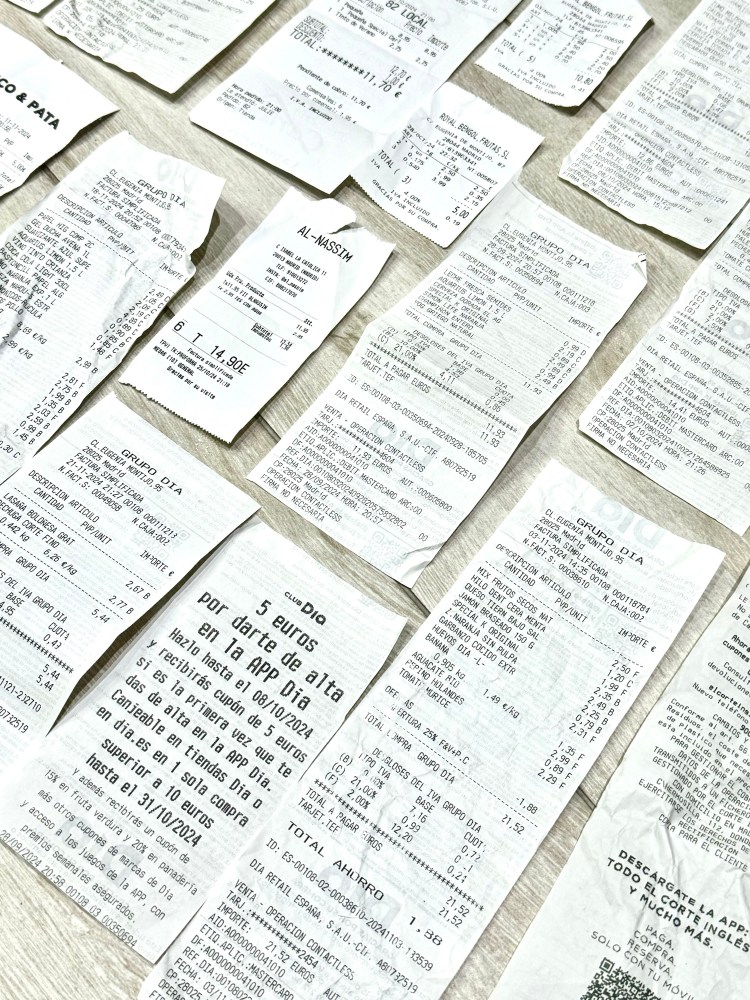
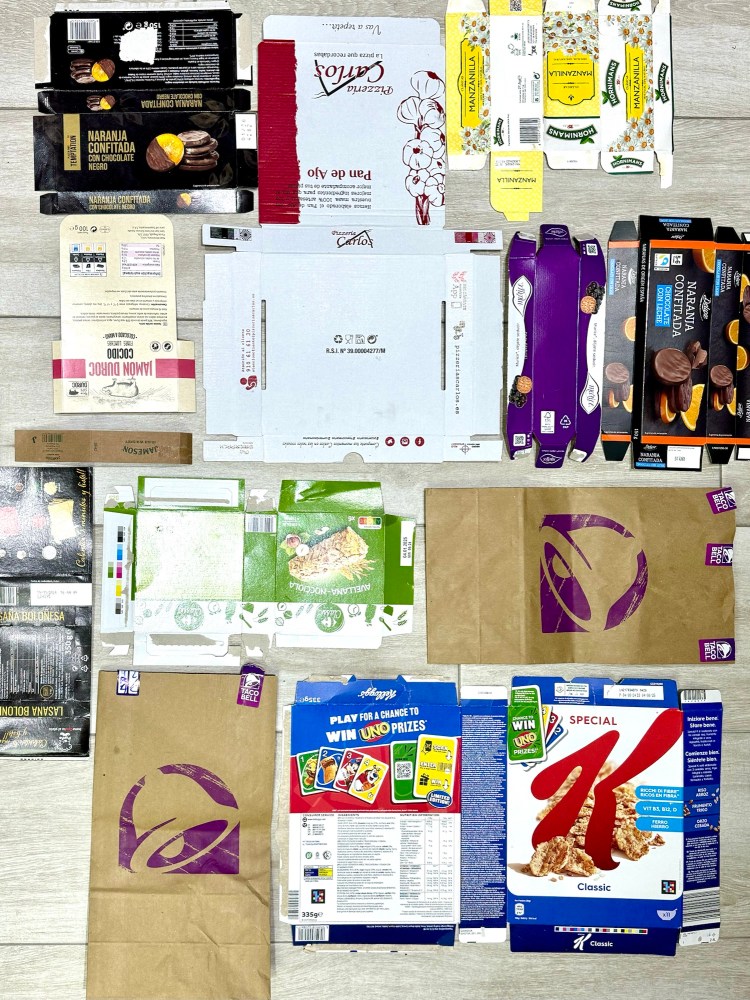

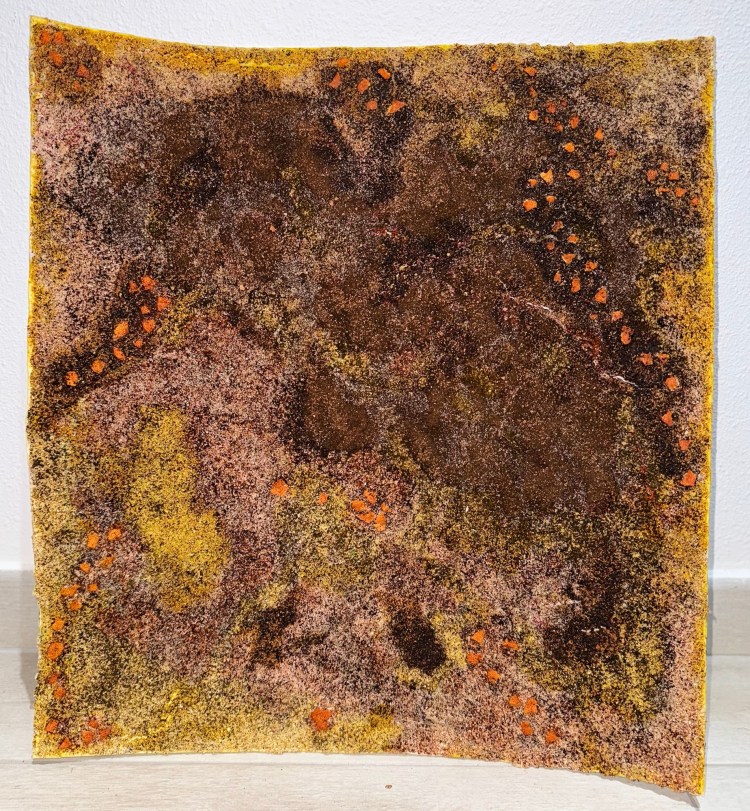
Composición de tierra frágil. 2024. Cáscara de huevo, café y cáscara de mandarina sobre cartón, malla y papel reciclados. 55cm x 47cm x 5cm.
Este proyecto nace a partir de residuos alimentarios que reuní durante tres meses, explorando su potencial como materia prima para la creación artística. Desde una práctica que cruza arte y cocina, reflexiono sobre el consumo diario, la generación de desechos y la posibilidad de transformarlos en biomateriales. Más que reciclar, se trata de observar, procesar y crear desde lo descartado, abriendo una vía crítica y personal hacia formas de producción más sostenibles y conscientes.
La técnica empleada combina entonces materiales reciclados y pigmentos naturales, dotando a la obra de una identidad profundamente vinculada al entorno natural y al proceso de creación artesanal. La mezcla se transforma en una base pictórica que, al secarse, revela grietas y texturas que evocan la imagen de una tierra erosionada. Sobre esta superficie, pigmentos como miel, cúrcuma, aceite de oliva, páprika, vino tinto, café y cocoa, se funden para dar forma a una paleta cromática que narra la historia de la degradación ambiental. Los tonos café, en sus diferentes matices, simbolizan la pérdida de fertilidad del suelo; mientras que los naranjas y amarillos sugieren una tierra enferma, contaminada y desgastada por el impacto humano.
Composition of Fragile Earth. 2024.
Eggshell, coffee, and tangerine peel on recycled cardboard, mesh, and paper.
55cmx47cmx5cm.
This project arose from food waste I collected over three months, exploring its potential as raw material for artistic creation. Through a practice that crosses art and cooking, I reflect on daily consumption, waste generation, and the possibility of transforming these materials into biomaterials. More than recycling, it is about observing, processing, and creating from what is discarded, opening a critical and personal path toward more sustainable and conscious modes of production.
The technique employed combines recycled materials and natural pigments, giving the work an identity deeply connected to the natural environment and the artisanal creation process. The mixture becomes a pictorial base that, when dried, reveals cracks and textures evoking the image of eroded earth. On this surface, pigments such as honey, turmeric, olive oil, paprika, red wine, coffee, and cocoa blend to form a color palette that tells the story of environmental degradation. The brown tones, in their various shades, symbolize the loss of soil fertility; while the oranges and yellows suggest a sick, contaminated, and worn-out land impacted by human activity.
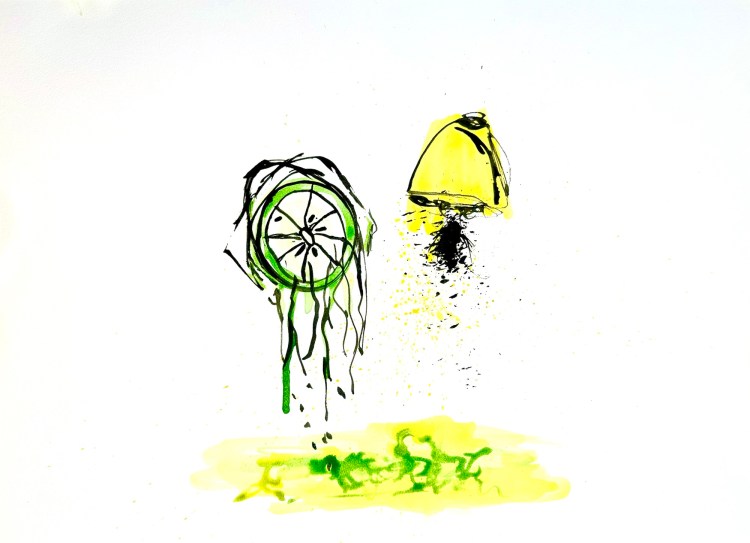
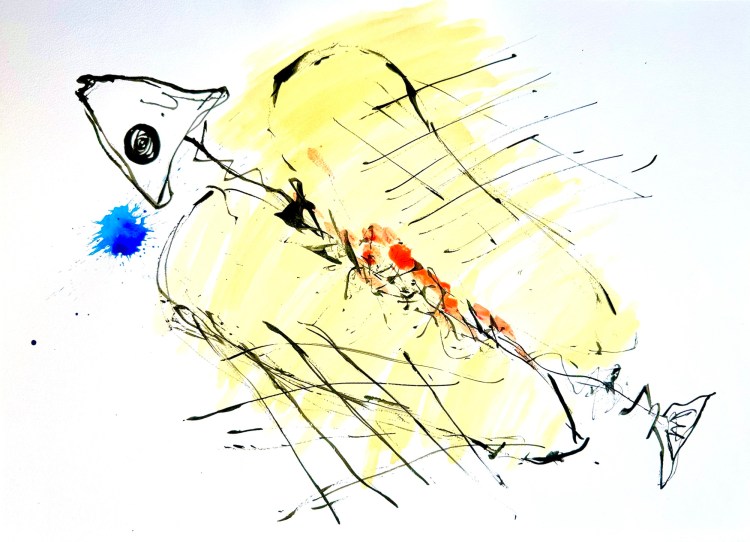


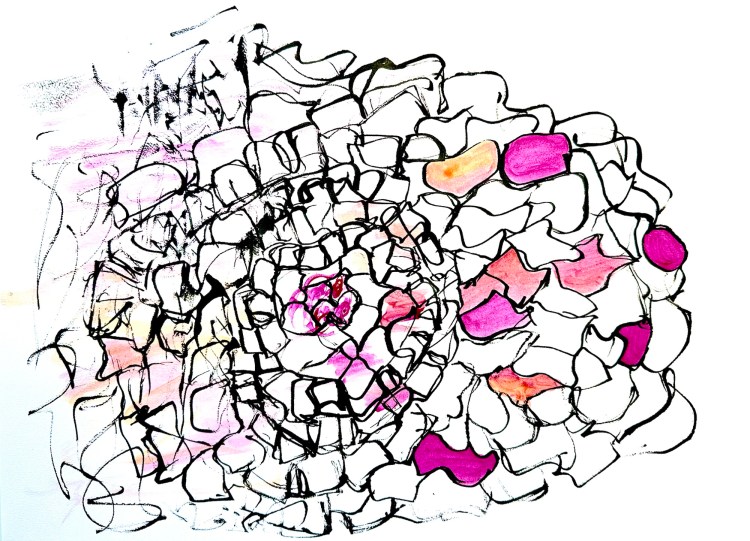
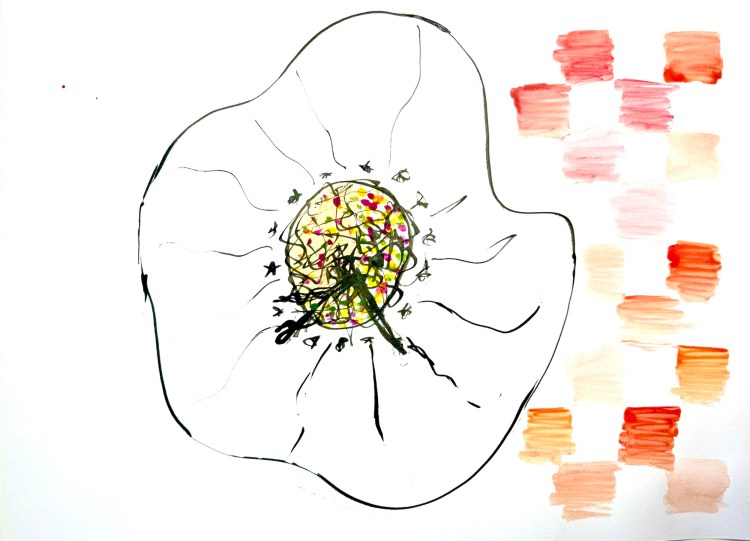
Serie: Naturaleza viva. 2024.
Zumo de lima y limón. 2024. Tinta china y acrílico sobre papel de acuarela. 29x41cm.
Fileteado de pescado. 2024. Tinta china y acrílico sobre papel de acuarela. 29x41cm.
Chile en brunoise. 2024. Tinta china y acrílico sobre papel de acuarela. 29x41cm.
Mezcla de ingredientes. 2024. Tinta china y acrílico sobre papel de acuarela. 29x41cm.
Leche de tigre microscópica. 2024. Tinta china y acrílico sobre papel de acuarela. 29x41cm.
Ceviche de autor en plato sombrero sobre mantel. 2024. Tinta china y acrílico sobre papel de acuarela. 29x41cm.
Series: Living Nature. 2024
Lime and Lemon Juice. 2024. India ink and acrylic on watercolor paper.
29×41 cm.
Fish Filleting. 2024. India ink and acrylic on watercolor paper.
29×41 cm.
Chili in Brunoise. 2024. India ink and acrylic on watercolor paper.
29×41 cm.
Mix of ingredients. 2024. India ink and acrylic on watercolor paper.
29×41 cm.
Microscopic Leche de Tigre. 2024. India ink and acrylic on watercolor paper.
29×41 cm.
Signature ceviche on a winged bowl over a tablecloth. 2024. India ink and acrylic on watercolor paper. 29×41 cm.
Foraging Contemporáneo. 2024. Videoperformance para redes sociales.
En el Parque del Oeste de Madrid, convertí un acto ancestral como el foraging en una exploración irónica y contemporánea, rozando con el absurdo: me fui de “shopping” al parque, recolectando tréboles, margaritas, fresas salvajes, flores de gaura y hojas de diente de león como si fueran productos en un mercado. Con una pequeña canasta en mano, seleccioné cada planta con cuidado, transformando un espacio público en un improvisado supermercado natural, mientras usaba una aplicación móvil en mi teléfono para identificar y verificar los nombres y características de cada especie. Este gesto subrayó cómo, en la era digital, la interacción con la naturaleza está mediada por la tecnología, convirtiendo al dispositivo móvil en una herramienta indispensable para explorar el entorno natural. Lo que podría parecer un simple picnic fue documentado en un video estilo Reel de Instagram, resaltando las formas actuales de comunicación visual que definen a mi generación, la Gen Z.
Este foraging contemporáneo no sólo cuestionó la posibilidad de recolectar alimentos en un entorno urbano, sino que también reflexionó sobre cómo hoy en día la interacción con la naturaleza está mediada por la estética de las redes sociales. La experiencia se convirtió en una coreografía cuidadosamente capturada, donde los gestos de recolección y preparación de la ensalada eran tan importantes como la narrativa visual que se estaba construyendo. El video, con su estilo dinámico y accesible, es a la vez una invitación y una crítica: ¿qué significa interactuar con la naturaleza cuando cada momento está diseñado para ser compartido en línea?
La práctica del foraging, tan románticamente asociada con la autosuficiencia y la conexión con la tierra, se enfrenta a una crisis en este contexto urbano. El parque, aunque lleno de vida, es también un espacio contaminado. Las plantas que recolecté están regadas con agua no potable, un recordatorio evidente de los riesgos sanitarios. Desinfecté estas plantas con agua y vinagre, pero la lechuga que traje del supermercado, que venía empaquetada en una bolsa plástica, no recibió el mismo tratamiento. Este contraste expone la contradicción fundamental: en un mundo donde la contaminación de la tierra es cada vez mayor, la idea de que podemos recolectar alimentos seguros en un parque público se vuelve casi absurda.
El acto de comer la ensalada preparada con estos ingredientes recolectados y comprados fue un gesto simbólico, que puso en crisis la noción misma de lo que consideramos alimento. ¿Qué significa nutrirse hoy? ¿Dónde termina el alimento y comienza el riesgo? La ensalada, aromatizada con hojas de té quemadas y complementada con mandarina, manzana, nueces y mango (con una vinagreta, hecha de vinagre de vino tinto, aceite de oliva, limón, sal, pimienta y fruta), fue una metáfora de la fragilidad de la seguridad alimentaria. En este contexto, el foraging ya no es una práctica de supervivencia, sino una reflexión sobre nuestra desconexión con la naturaleza, una intervención artística que desvela la ironía de buscar sustento en un entorno que ya no puede garantizarlo. Y un dato adicional, esta ensalada no fue solo una metáfora o una obra de arte: fue mi almuerzo real.
Este performance encarnó el nature embodiment en su forma más contemporánea: el cuerpo como intermediario entre un entorno natural degradado y una cultura digital obsesionada con la estética y la instantaneidad. Comer lo recolectado fue un acto de incorporación, pero también de interrogación. El parque, la ciudad, la naturaleza y el cuerpo se entrelazaron en una narrativa efímera que sólo puede existir plenamente en la contradicción: nutrirnos en un mundo que nos expone al riesgo, conectarnos con la naturaleza a través de la pantalla y cuestionar qué significa realmente alimentarse en el siglo XXI.
Contemporary Foraging. 2024. Videoperformance for social media.
In Madrid’s Parque del Oeste, I transformed an ancestral act like foraging into an ironic, contemporary exploration bordering on the absurd: I went “shopping” in the park, gathering clovers, daisies, wild strawberries, gaura flowers, and dandelion leaves as if they were market products. With a small basket in hand, I carefully selected each plant, turning a public space into an improvised natural supermarket, while using a mobile app on my phone to identify and verify the names and characteristics of each species. This gesture highlighted how, in the digital age, our interaction with nature is mediated by technology, making the mobile device an indispensable tool to explore the natural environment. What could have seemed like a simple picnic was documented in an Instagram Reel–style video, emphasizing the visual communication styles that define my generation, Gen Z.
This contemporary foraging not only questioned the possibility of collecting food in an urban environment but also reflected on how today’s interaction with nature is shaped by social media aesthetics. The experience became a carefully choreographed performance, where the gestures of gathering and preparing the salad were as important as the visual narrative being created. The video, with its dynamic and accessible style, is both an invitation and a critique: what does it mean to interact with nature when every moment is designed to be shared online?
The practice of foraging, so romantically associated with self-sufficiency and connection to the earth, faces a crisis in this urban context. The park, though full of life, is also a contaminated space. The plants I gathered were watered with non-potable water, a clear reminder of health risks. I disinfected these plants with water and vinegar, but the lettuce I brought from the supermarket, packaged in plastic, did not receive the same treatment. This contrast exposes a fundamental contradiction: in a world increasingly polluted, the idea that we can safely gather food in a public park becomes almost absurd.
Eating the salad prepared with these gathered and purchased ingredients was a symbolic act that questioned the very notion of what we consider food. What does it mean to nourish oneself today? Where does food end and risk begin? The salad, flavored with burnt tea leaves and complemented with mandarin, apple, walnuts, and mango (with a vinaigrette made of red wine vinegar, olive oil, lemon, salt, pepper, and fruit), served as a metaphor for the fragility of food security. In this context, foraging is no longer a survival practice but a reflection on our disconnection from nature — an artistic intervention that reveals the irony of seeking sustenance in an environment that can no longer guarantee it. And one more detail: this salad was not only a metaphor or an artwork; it was my actual lunch.
This performance embodied nature embodiment in its most contemporary form: the body as an intermediary between a degraded natural environment and a digital culture obsessed with aesthetics and immediacy. Eating what was gathered was an act of incorporation, but also of interrogation. The park, the city, nature, and the body intertwined in an ephemeral narrative that can only fully exist in contradiction: nourishing ourselves in a world that exposes us to risk, connecting with nature through a screen, and questioning what it really means to feed oneself in the 21st century.
 Iveth Piracoca